There is a certain kind of part that every hardware company eventually builds a product around, and then spends years regretting nothing about except its availability. The STM32F103 — ST's workhorse Cortex-M3, the blue-pill MCU that taught a generation of engineers embedded development — is the canonical example. It sits inside motor controllers, battery chargers, industrial sensors, medical peripherals, and half the gadgets on any given production schedule. It is old enough to vote. And yet here we are, deep into 2026, and sourcing managers are still trading stories about it.
The shortage years of 2021 and 2022 turned this chip into a legend for the wrong reasons: spot prices that ran ten, sometimes twenty times above the franchised list price, reels changing hands like concert tickets, and a counterfeit wave so large that "STM32" became shorthand in QC labs for "check it twice." Official supply has long since come back — but anyone who buys this part regularly knows the story didn't end. It just changed shape.
Where the STM32F103 actually stands in 2026
The authorized channel is healthy on paper. ST lists the F103 family as active, lead times through franchised distributors have normalized, and the panic pricing of the shortage years is gone. That is the good news, and it is real.
The complications are quieter. Production capacity at ST has been steadily steered toward newer families — the G0, G4, and H5 lines — which means the F103 is maintained rather than promoted, and specific variants drift in and out of allocation without warning. The popular STM32F103C8T6 and its 64-kilobyte sibling remain the most requested, most counterfeited, and most price-volatile members of the family, precisely because every legacy design on earth uses them. Distributor stock levels look fine until the week a mid-size EMS pulls fifty thousand pieces for a charger program — then the shelf is bare and the quoted lead time is suddenly a season long.
The practical posture for 2026 is therefore not panic, but preparation: know your real consumption, keep a calculated buffer on the variants your line cannot live without, and have your alternates qualified before you need them. Which brings us to the part of the conversation that used to be whispered and is now just engineering.
The pin-compatible alternatives are grown-ups now
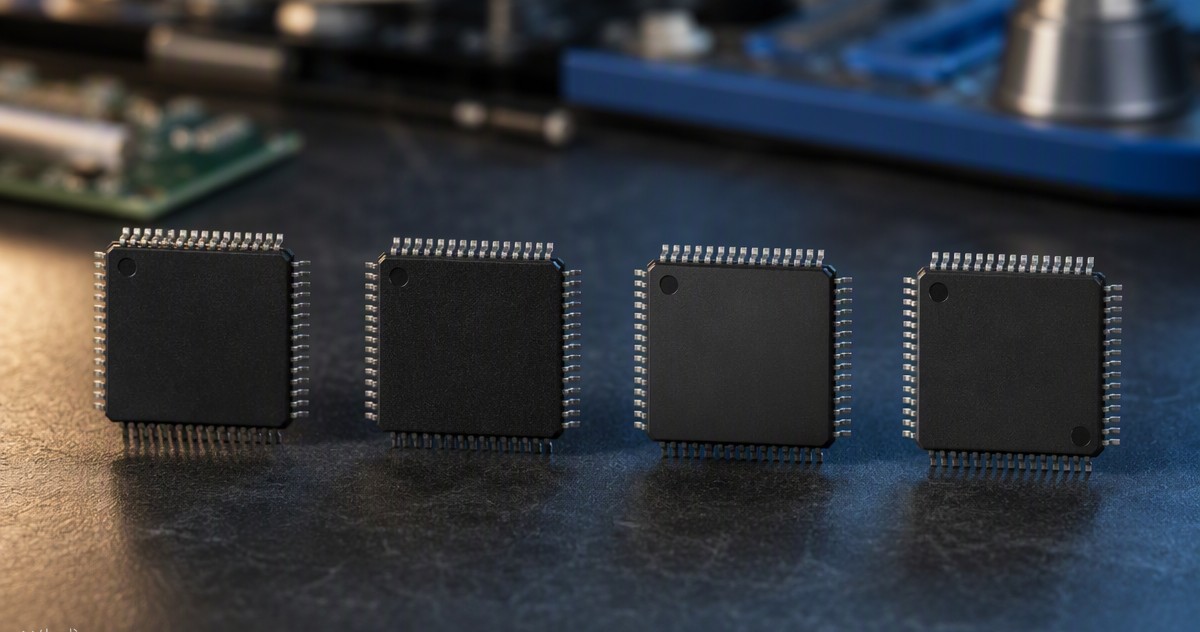
During the shortage, a wave of Chinese-designed, pin-compatible M3 MCUs went from desperate last resort to mainstream design-in choice. GigaDevice's GD32F103 family is the most established — same pinout, faster core clock, and years of field data behind it. Artery's AT32 parts and WCH's CH32 series cover adjacent territory. None of these are drop-in in the lazy sense: the peripherals differ in the corners, the flash timing differs, the ADC behavior differs, and any firmware that pokes registers directly needs a proper review. But the migration path is documented, the community knowledge is deep, and for a large class of cost-sensitive, high-volume products the economics are simply better. Plenty of designs that switched in 2022 never switched back.
The honest guidance is this: if you are designing something new today, there is little reason to anchor it to a legacy F103 variant. If you are maintaining an existing product, qualify one compatible alternative as a hedge even if you intend to keep buying the ST original. The qualification work is a week of engineering time; the first time allocation bites, it pays for itself before lunch.
Buying the original safely
Sometimes the original is the answer — the firmware is certified, the customer contract names the part, the requalification budget doesn't exist. Fine. Then the job is buying genuine silicon, and that job has a specific shape.
Stay in the franchised channel whenever its price and lead time are tolerable; for a part this heavily counterfeited, the authorized premium is insurance, not markup. When the franchised shelf is empty, the open market has the stock — the F103 is one of the most liquid parts in the Asian spot market — but it is also where the remarking industry concentrates its efforts, because demand is deep and buyers are hurried. The failure modes are the usual four: pulled parts re-tinned and sold as new, commercial-grade remarked as the extended-temperature variant, empty packages, and outright clones of the package with smaller dies inside. Every one of them is catchable, and none of them is catchable by looking at a certificate. Date-code formats, laser-mark texture, X-ray die and bond-wire patterns, and a solderability check on older lots do the work. Any supplier worth wiring money to will show you that evidence before final payment; the ones who hesitate are answering the question for you.
One more habit that separates calm buyers from frantic ones: track the part, don't just buy it. Price and availability on the F103 family move in pulses, and the buyers who watch the spot market weekly buy during the troughs. The ones who only look when the shelf is empty buy during the spikes, and pay for the privilege.
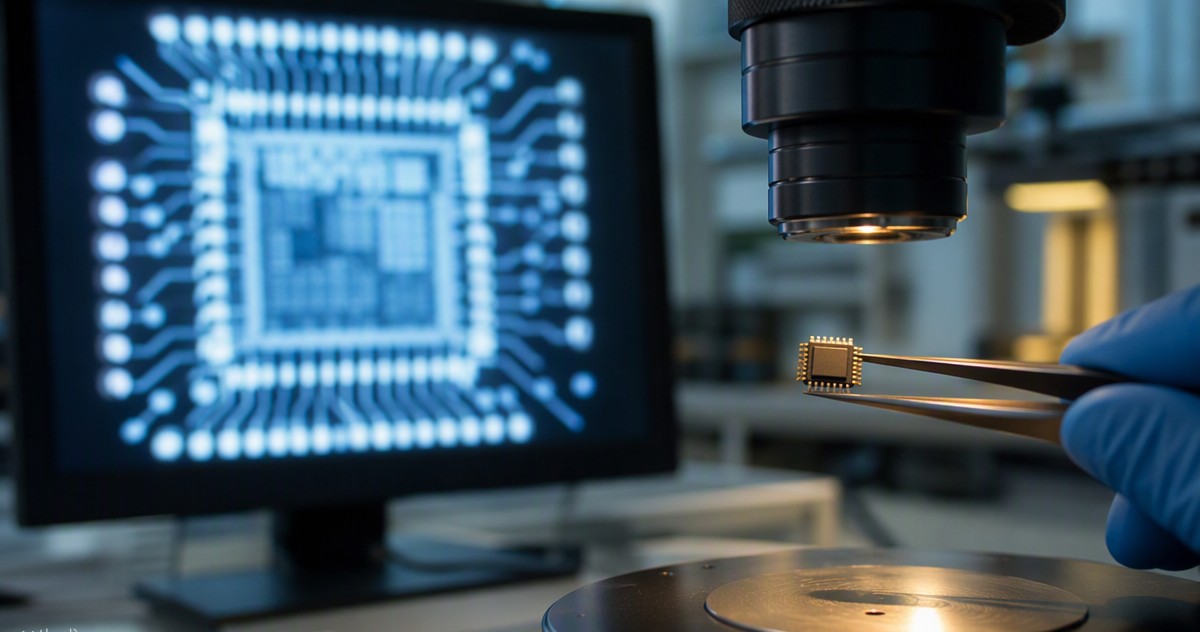
If you're holding an STM32 requirement right now — a shortage variant, a date-code question, or a quote that smells wrong — send it over. RISEIC's Hong Kong desk sources the F103 family and its qualified alternatives daily, and every lot goes through X-ray and microscopy in our own lab before it ships. Send the RFQ; you'll have an answer within 24 hours, and the parts will arrive with the inspection report attached.